
Leave a Comment / Self Care, Texas State Parks / By Susan Svec
I Was Expecting Teepees
I had been looking forward to Mission Tejas State Park for a long time, because I had read that it was home to the first Spanish mission in what would become Texas. So I knew I was heading somewhere historical.
I also had a completely wrong picture in my head of what I was going to find. For some ridiculous reason, I was expecting teepees.
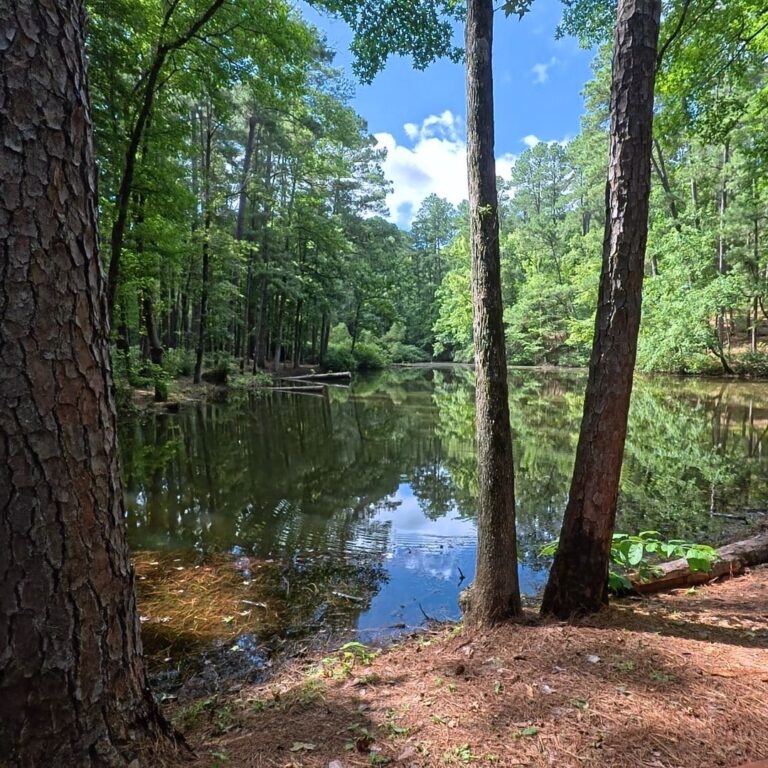
What I found instead was better. Jerry and I stopped here on our way down to Galveston Island, arriving early enough in the day that the July heat had not yet settled in. The park greeted us with tall pines, a quiet pond, and more layers of history than almost any park I have visited so far on this journey.
This is stop 22 of 88 on my quest to visit every Texas state park, and it is the first one where I felt the history of a place as strongly as its nature.
Some places you walk through. This one, you walk with.
A Road Older Than Texas Itself
Long before there was a Texas, there was a road.
The Caddo people traveled it first. Later, the Spanish followed the same path and named it El Camino Real — the Royal Road — a route that eventually stretched some 2,500 miles from Mexico all the way into Louisiana. That ancient roadway passes right through what is now Mission Tejas State Park, and there is a section of the original road you can actually walk today.
Think about that for a moment. You can put your own two feet on a path that people have been walking for centuries.
In 1690, Spanish friars built Mission San Francisco de los Tejas near a Caddo village here — the first Spanish mission in East Texas. The mission itself did not last long, but its name did. “Tejas” comes from the Caddo word for friend, and it is the word that eventually became Texas. In a very real way, the name of our entire state started in these woods.
The Mission in the Pines
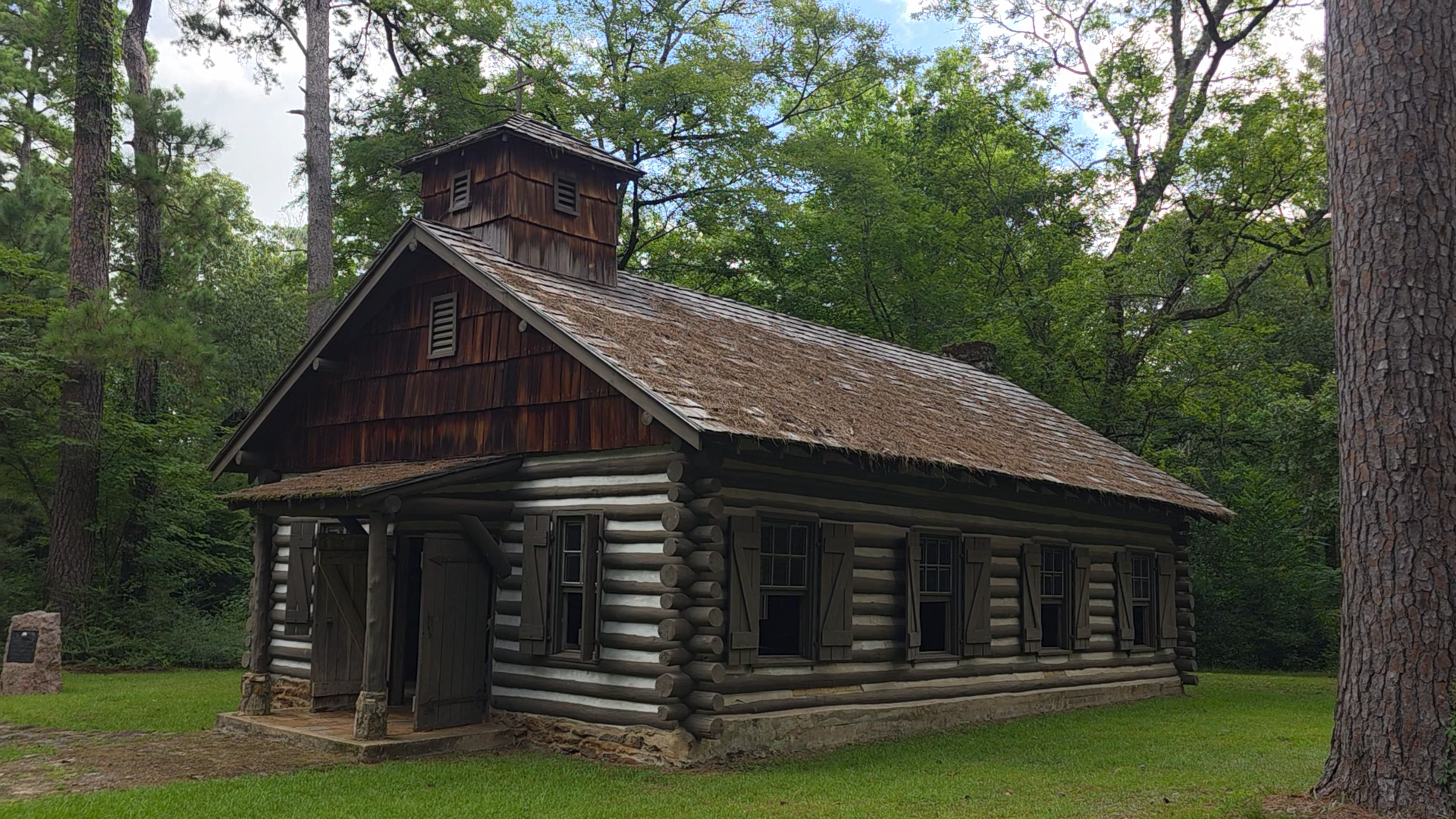
The building that stands in Mission Tejas State Park today is a commemorative log structure, built in the 1930s by the young men of the Civilian Conservation Corps, who also carved out the trails and the park itself. Stepping inside, it is quiet and simple — hand-hewn logs, soft light, and that particular stillness that old (and old-style) buildings seem to hold.
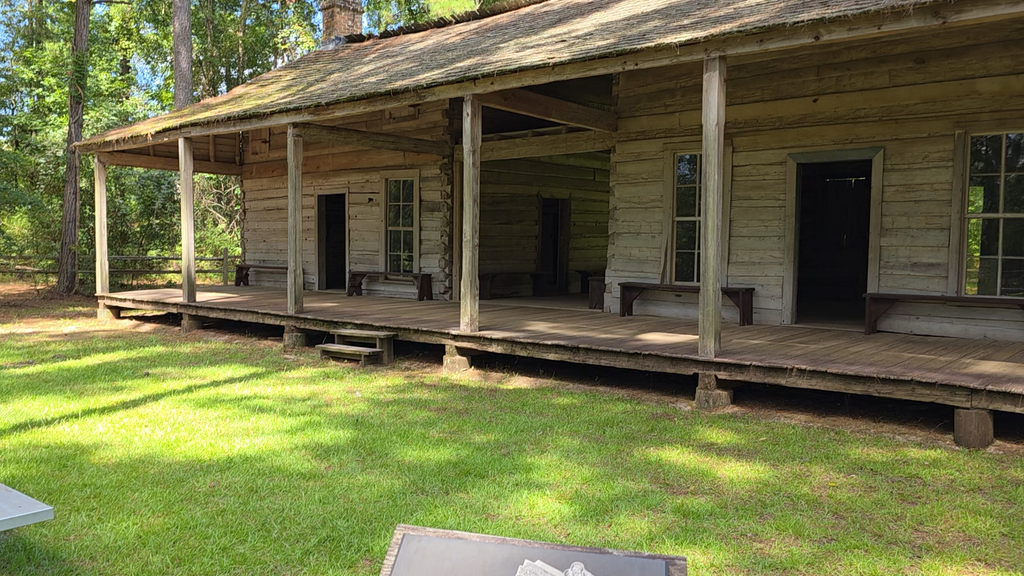
And if, like me, you enjoy history, there is yet another treasure on the park grounds: the Rice Family Log Home. Joseph and Willie Masters Rice came to Texas from Tennessee in 1828 and began building it along El Camino Real, adding onto it over the years, and it sheltered travelers on that old road for generations before it was moved to the park for safekeeping. The construction itself is worth a slow walk around — a plaque at the house explains that its log-building style traces back to German building traditions, something quite unusual for this part of Texas at the time.
The Sketch: A Pond Like Glass
Mission Tejas State Park does not have a lake. What it has instead is a small, supremely peaceful pond, reached by a quaint little footbridge — and honestly, I did not miss the lake one bit.
I found a bench at the water’s edge, pulled out my number 3 pen, and started sketching the trees along the bank. The water was like glass. The only sounds were birds, insects, and wind moving through the pines.
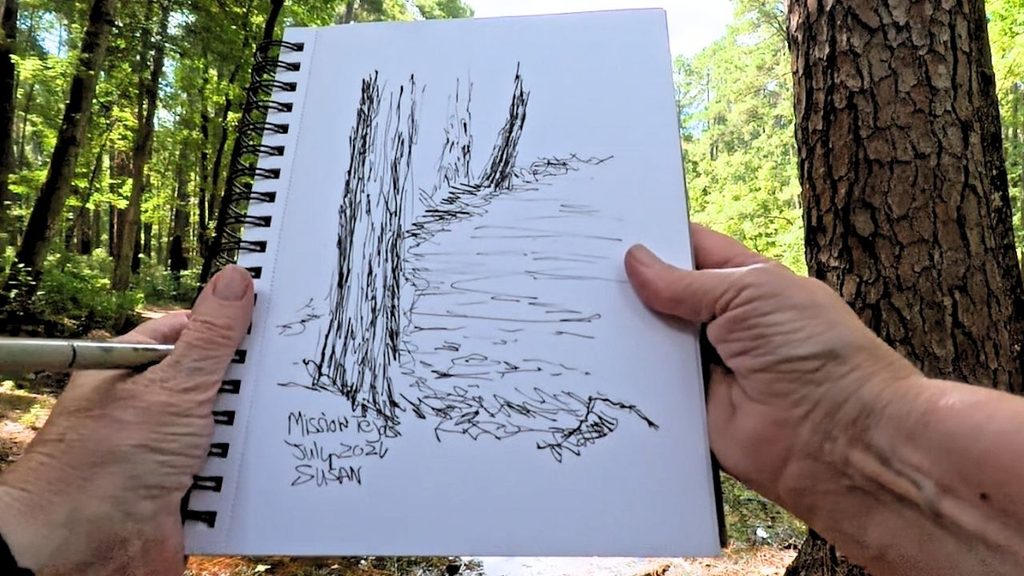
Sketching does for me what any good ritual does: it asks me to focus on something outside myself for a little while. Whatever I walked in carrying — worry, stress, the to-do list — gets set down on the bench beside me while my pen is moving. It does not have to take long. It just has to take me out of my own head.
A Tiny Ritual: Notice What Has Been Here Longer Than You
If you want to take one thing from this park visit, take this.
Wherever you are — a park, a porch, a parking lot with one stubborn tree — take one slow breath and notice what has been here longer than you. At Mission Tejas, that was easy: the road, the mission site, the pines, the pond. But it works anywhere, because nature has always been here longer than we have.
Then listen for one sound around you. And let yourself be part of the place, just for a moment.
That is the whole ritual. One breath, one noticing, one sound. I do a version of it at every park now, and it has helped me see things I never would have slowed down enough to notice before.
Small in the Fabric of Time — and Strangely Comforted by It
Whenever I get to sit for a while in a historical place like this, I am reminded of just how small our own place is in the enormous fabric of time. The Caddo walked this ground centuries before the friars arrived in 1690. The CCC boys swung their axes here almost a century ago. And the pines were here before any of them.
That does not diminish anyone’s contributions — ours included. Our actions absolutely affect the people around us, and they can shape what comes after us. But through it all, time continues to march on.
I find that thought not only grounding, but strangely reassuring. When times feel turbulent — now, or in any chapter of history — it helps to stand on a road that has already outlasted so much, and trust that things will keep going and work themselves out.
We are each a small stitch in a very long thread. I think that is good news.
The Soap That Stayed Home
Now, a confession. I usually tuck a bar of my own soap into the bag for these trips — a small piece of the shop that comes along for the ritual of washing up after a morning on the trail. This time, packed up and headed for Galveston, I drove off without a single bar. Not one.
And you know what? The park did not mind, and neither did I. The ritual that mattered that day was the slow breath by the pond, not anything I could have carried in. My soaps have always been meant to support those quiet moments, not replace them — and Mission Tejas was a gentle reminder that the quiet comes first.
(The soap got its turn when I got home. It usually does.)
Stamping Park Number 22
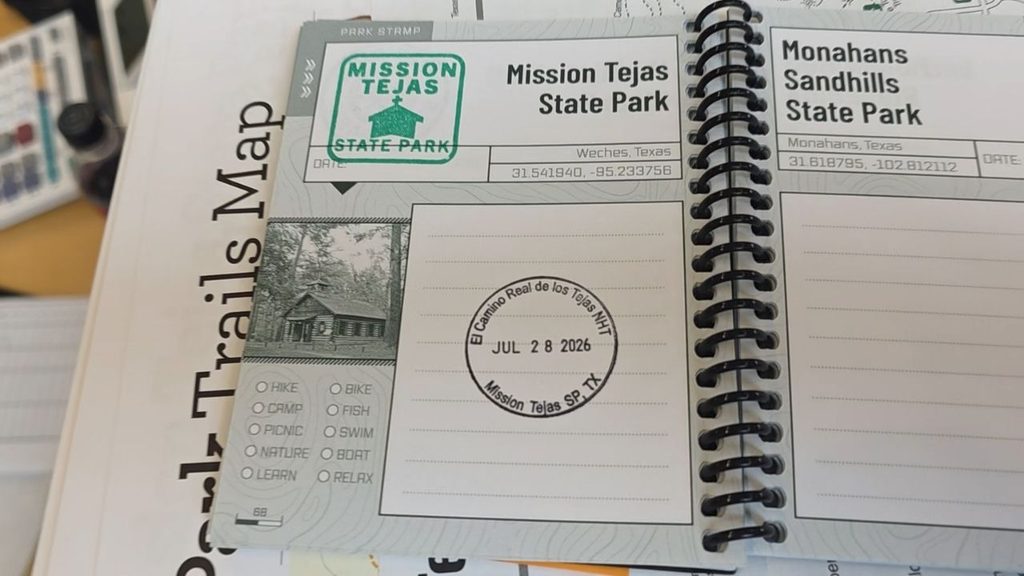
Mission Tejas State Park is stop 22 of 88 on my Texas State Parks Quest. Atlanta State Park came before this one, and next up is Martin Dies, Jr. State Park.
Each stamp in that passport book is a small, satisfying piece of proof. Proof that I showed up. Proof that even a travel day on the way to somewhere else can hold a quiet hour that changes how the whole trip feels.
If You Love a Little History with Your Nature
Whatever park is closest to you, I would gently encourage you to go — and if you can find one with some history in it, all the better. There is something about sitting still in a place where so many others have passed through that puts an ordinary day in its proper place.
Mission Tejas State Park offers natural beauty, yes — but also visual and historical treasures: a road older than Texas, a mission that gave our state its name, and a pond that will hold perfectly still while you sketch it.
| Mission Tejas State Park is stop 22 of 88 on my Texas State Parks Quest. New episodes post every Friday. If this resonated with you, share it with someone who could use a quiet moment of their own. |
|---|
Practical Notes for Your Mission Tejas Visit
- Location: Near Grapeland in the Weches community, Houston County, along State Highway 21 in East Texas — the modern highway follows the route of El Camino Real
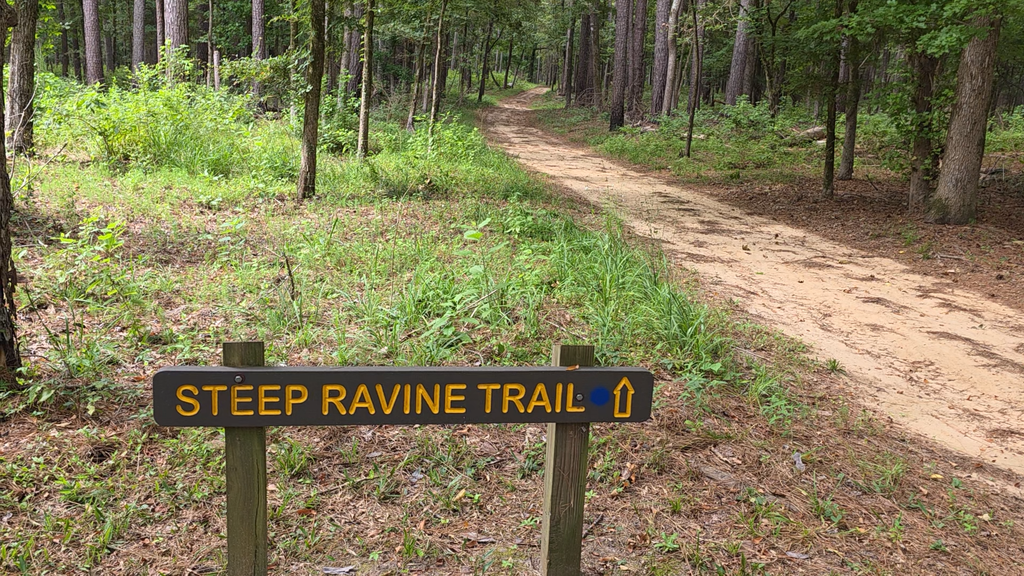
- Don’t miss: The section of the original El Camino Real you can walk, the commemorative mission structure, and the Rice Family Log Home
- For sketchers and sitters: The small pond, reached by a little footbridge, has bench seating and water like glass in the early morning
- Timing tip: Go early in the day during summer months — we arrived before the heat set in, and it made all the difference
- Day use hours and entrance fees: Standard Texas State Park rates apply — confirm current hours at the Texas State Parks website before you go
- What to bring: Water, walking shoes, a sketchbook if that calls to you — and whatever small ritual you like to carry (I clearly cannot be trusted to remember mine)
Frequently Asked Questions
What is there to do at Mission Tejas State Park?
Mission Tejas State Park combines East Texas piney woods with remarkable history: you can walk a preserved section of El Camino Real, visit the commemorative structure honoring Mission San Francisco de los Tejas (built in 1690), walk through the 1800s Rice Family Log Home, hike shaded trails, and sit beside a peaceful pond that is perfect for sketching or simply slowing down.
Where is Mission Tejas State Park located?
Mission Tejas State Park is located in the Weches community near Grapeland, in Houston County, East Texas, along State Highway 21 between Crockett and Alto. It makes a lovely stop on a longer drive through East Texas, as it was for us on our way to the coast.
Why is it called Mission Tejas?
The park commemorates Mission San Francisco de los Tejas, the first Spanish mission in East Texas, established in 1690 near a Caddo village. “Tejas” comes from the Caddo word for friend — the same word that eventually gave Texas its name.
How many Texas State Parks have you visited so far?
Mission Tejas State Park is stop 22 of 88 on my Texas State Parks Quest — a personal journey to visit every park in the system while documenting how nature, sketching, and simple quiet rituals support graceful aging and intentional living.
Mission Tejas State Park is stop 22 of 88 on my Texas State Parks Quest. Next up: Martin Dies, Jr. State Park. New episodes post every Friday — subscribe to follow along.
References