
Leave a Comment / Self Care, Texas State Parks / By Susan Svec
Stop 5 of 88 — and Already One of the Most Unexpected
I want to tell you about a moment that stopped me at Huntsville State Park.
I was standing near the old CCC lodge — built in 1942 by the Civilian Conservation Corps — and a woman nearby mentioned, almost in passing, that she used to come there to dance in the sixties. She said it so casually. Like it was just something she carried with her, something ordinary.
It wasn’t ordinary to me.
In that moment, eighty years collapsed into a single quiet afternoon. And I understood something about this place that no trail map could have told me: some places don’t just hold nature. They hold time.
Deep in the Piney Woods
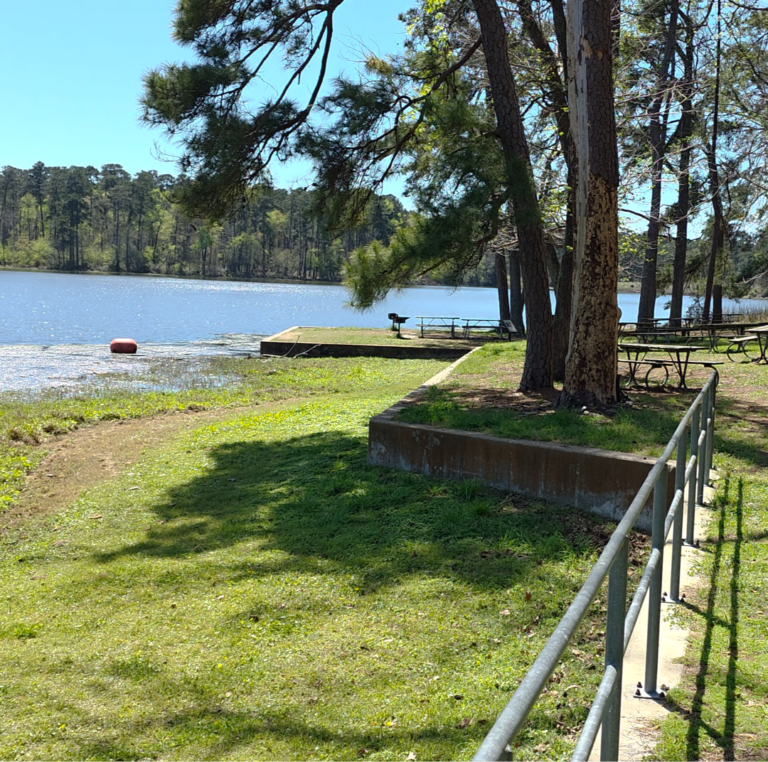
Huntsville State Park sits in the Sam Houston National Forest, about an hour north of Houston, and the drive in already tells you something is different. The pines close in over the road before you’ve even reached the entrance. By the time you step out of the car, the canopy is overhead and the temperature has dropped and something in your nervous system — something you didn’t know was braced — begins to let go.
I’ve been to several Texas State Parks now. Five, to be exact, with 83 still ahead of me. Huntsville is the first one that felt truly immersive from the moment of arrival. Not a park you look at. A park you step inside.
The lake is beautiful. The trails shift between dense pine canopy and open water in a way that keeps surprising you. But it was the CCC lodge — tucked into the trees, timber and stone, completely unhurried — that became the heart of this visit for me.
What the CCC Built Here
The lodge at Huntsville State Park was built in 1942 by the Civilian Conservation Corps, the New Deal program that put young men to work building infrastructure across America’s public lands during the Depression. By the 1960s it had become a gathering place — dances on Friday nights, families driving in from surrounding towns, a community anchoring itself around a place in the pines.
When I stood in front of it with my sketchbook, I kept thinking about what it means to build something that outlasts the moment it was made. Those young men had no idea they were building a dance hall. They were just building carefully, with good materials, with intention.
That’s the kind of thing I want to be doing too. Not just with soap. With everything.
The Sketch: Drawing Something That Holds Time
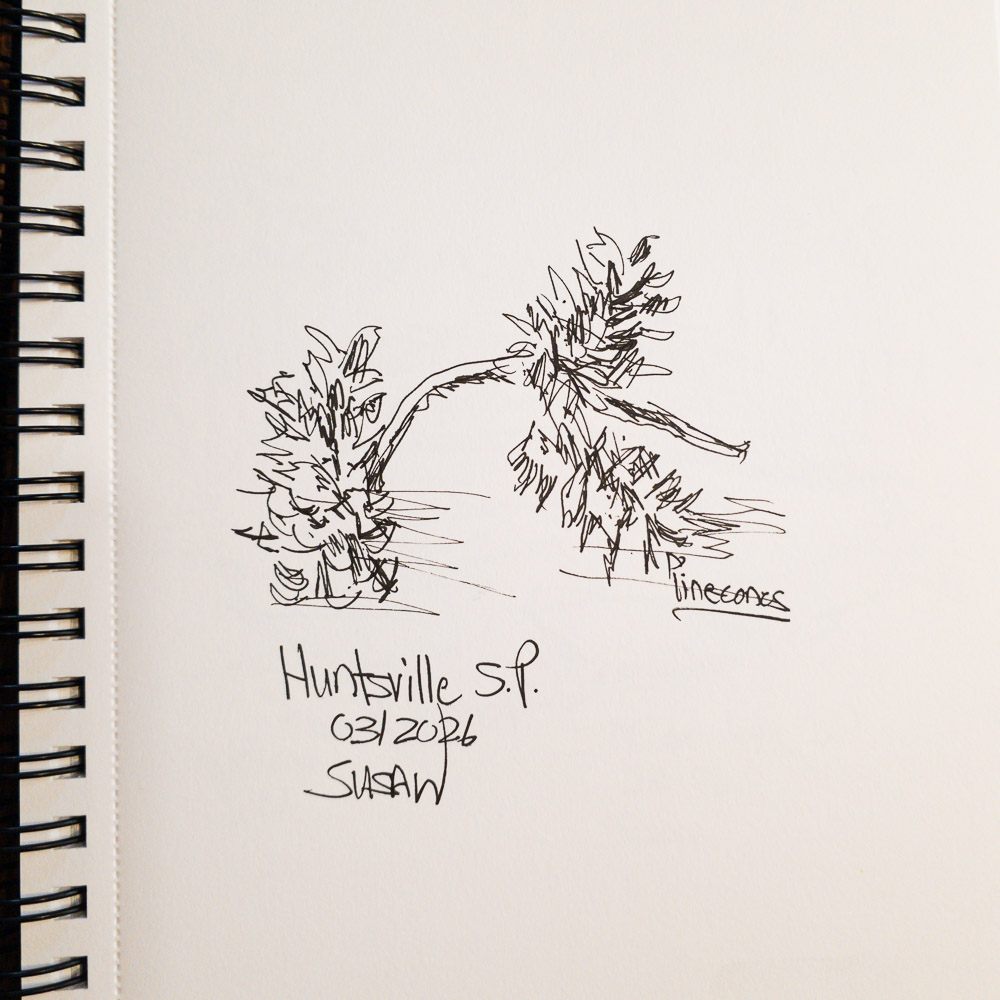
I’ve sketched landscapes at every park on this journey. Huntsville was only the second time I sat down to draw a structure — and it taught me something similar to what Bonham’s stone headquarters taught me, but quieter.
Drawing timber is different from drawing stone. Stone has weight and permanence. Timber has warmth. You follow the grain lines, the way the wood has settled and darkened over eighty years, the shadows under the eaves. It asks for a kind of patient attention that is almost like listening.
By the time I finished, the woman who used to dance there had long since walked away. But something she said was still sitting with me. Some places hold people across generations without making a fuss about it. They simply stay standing, and they let you come back.
Some places don’t just hold nature. They hold time.
What the Pines Do for Your Nervous System
There is real, measurable science behind what happens when you step into a forest. The Japanese practice of Shinrin-yoku — forest bathing — has been studied extensively, and the findings are consistent: time among trees lowers cortisol, reduces blood pressure, improves mood, and supports immune function. The phytoncides released by pine trees in particular have been shown to increase natural killer cell activity — the cells responsible for fighting inflammation and supporting immune response.
I am not a scientist. But I have spent enough time in enough parks now to tell you that the East Texas pines do something to you before you’ve had time to decide whether to let them.
That kind of deep settling — the kind that starts in your nervous system and works its way outward — is one of the most honest things you can do for your skin and your energy. Stress ages us from the inside. Nature, quietly and without drama, begins to undo that.
Walk in the Woods Soap: What I Carried and Why
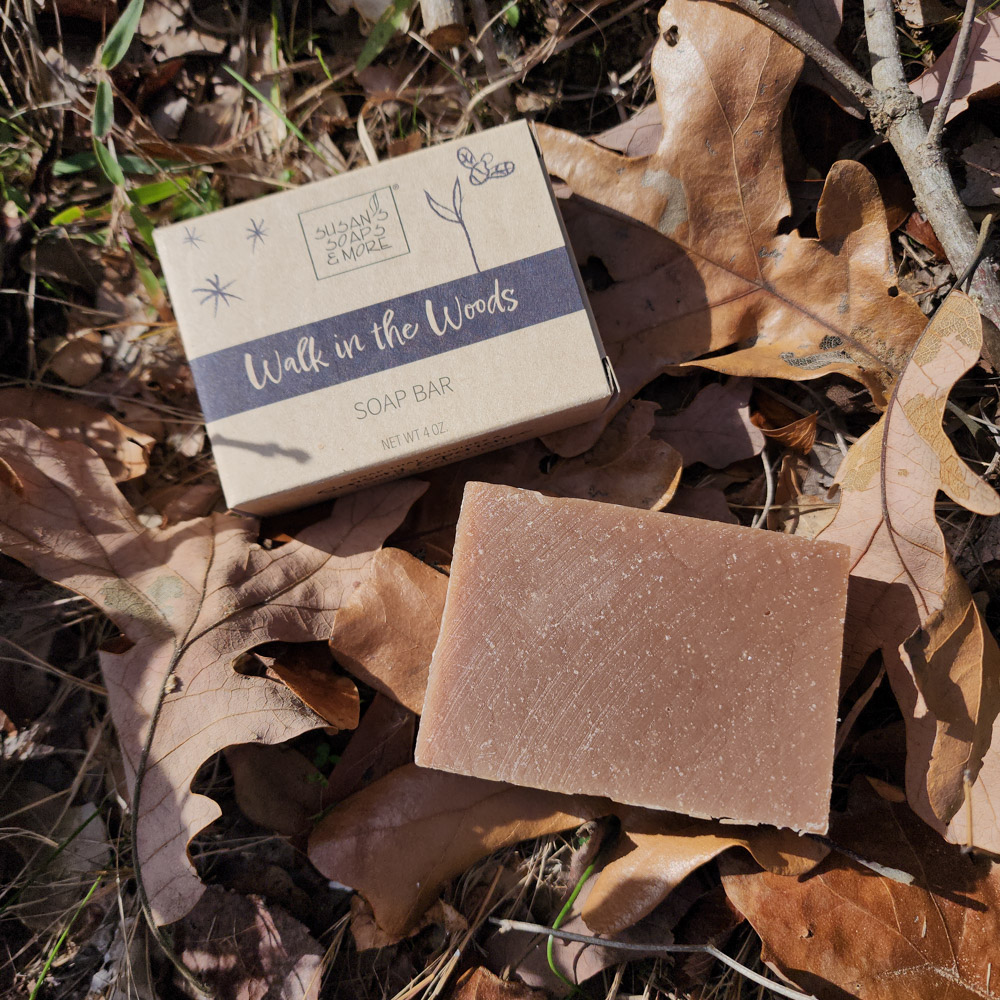
I brought Walk in the Woods Soap to Huntsville — and honestly, it was the only choice.
This was the first men’s scent blend I ever developed. I wanted something earthy and grounding that men would genuinely reach for, but that women would love too. Lavender and patchouli together — not sweet, not sharp, just grounded. It became one of the most loved bars in the shop, by everyone.
Standing in those pines, I understood again why I made it. After a few hours in the forest — bark and earth and cool air — you want to close the day with something that honors where you’ve been. Not something that scrubs it away. Something that meets it.
That’s what this soap does. And if you really want to lean into that deep woodsy feeling, our Fir & Cedar Soap sits right alongside it — more resinous, a little darker, the scent of fir and cedar bark. The two together are basically a day in a Texas forest in bar form.
My approach to skincare hasn’t changed much since I started making soap over twenty years ago. Fewer things. Better things. Ingredients that come from the earth and work with your body rather than against it. That philosophy is what brought me into these parks, and it’s what lives in every bar I make.
The Quest: 88 Parks, One Practice
Stop 5 of 88.
Cedar Hill was where the practice began. Bonham was where it deepened. Huntsville State Park is where it became something I can feel in my body — the difference between knowing that nature is good for you and actually experiencing what that means.
I am visiting all 88 Texas State Parks, documenting each one through video, sketching, and writing — with a focus on what time in nature does for graceful aging, skin health, and intentional living. This is not a travel series. It is a practice. And you are welcome to walk it with me.
If this resonated with you, share it with someone else who needs to remember that some places hold time — and so do they.
Practical Notes for Your Huntsville State Park Visit

- Location: 565 Park Road 40, Huntsville, TX 77340
- Day use hours: Typically 7 AM to 10 PM — confirm current hours at the Texas State Parks website
- Entrance fee: Standard Texas State Park day use fees apply; the Annual Pass is worth it if you’re visiting multiple parks
- Park highlight: The 1942 CCC lodge — walk around it slowly and look at the timber work
- What to bring: Water, a journal, comfortable shoes, and something grounding for after — your skin will thank you
- Best time to visit: Morning, when the pine canopy light is at its best
- Worth noting: The expansive deck behind the lodge has an amazing view of the lake and is wonderful to simply sit and absorb your surroundings. The park is larger than it looks from the entrance so give yourself more time than you think you need.
FAQs
What is the Texas State Parks Quest?
The Texas State Parks Quest is my personal journey to visit all 88 official Texas State Parks. Each visit is documented through video, sketching, and writing — with a focus on how time in nature supports graceful aging, skin health, and intentional living at every stage of life.
Why do you sketch at every park?
The sketchbook is one of the anchoring practices of this whole journey. Sketching forces me to slow down and truly look at where I am — which is both a meditative practice and a creative one. The sketches from all 88 parks will eventually illustrate a book I am writing about this journey, so each drawing is also building something larger.
What is the CCC lodge at Huntsville State Park?
The lodge was built in 1942 by the Civilian Conservation Corps, a New Deal program that employed young men to develop public lands across America during the Depression era. By the 1960s it had become a beloved gathering place for the surrounding community — including, as I discovered on my visit, weekly dances that people still remember fondly today.
What does forest bathing have to do with skincare and aging?
More than most people realize. Time among trees — particularly pine forests — measurably lowers cortisol, reduces inflammation, and supports immune function. Chronic stress is one of the most significant drivers of accelerated aging, both internally and in the skin. Combining regular time in nature with thoughtful, natural skincare is one of the most genuinely holistic approaches to aging well that I know of.
What is Walk in the Woods Soap and why did you bring it to Huntsville?
Walk in the Woods was the first men’s scent blend I developed — lavender and patchouli together, earthy and grounding. It became one of the most loved bars in the shop by everyone who tries it. I brought it to Huntsville because after a few hours in the East Texas pines, you want something that honors where you’ve been. It felt like the only right choice.
How can I follow along with this series?
Subscribe to my YouTube channel for new park episodes each week, and bookmark this blog for the written companion posts. Each post goes deeper into the themes from that visit — nature, graceful aging, sketching, and caring for yourself well at every stage of life.
Huntsville State Park is stop 5 of 88 on my Texas State Parks Quest. New episodes post every Friday. If this resonated with you, share it with someone who needs a reminder that some places hold time — and so do they.